Reconnaissance
A compact platform approaches the facility and sends data to the operator.
- visual and thermal inspection;
- gas and leak detection;
- route and structural assessment.
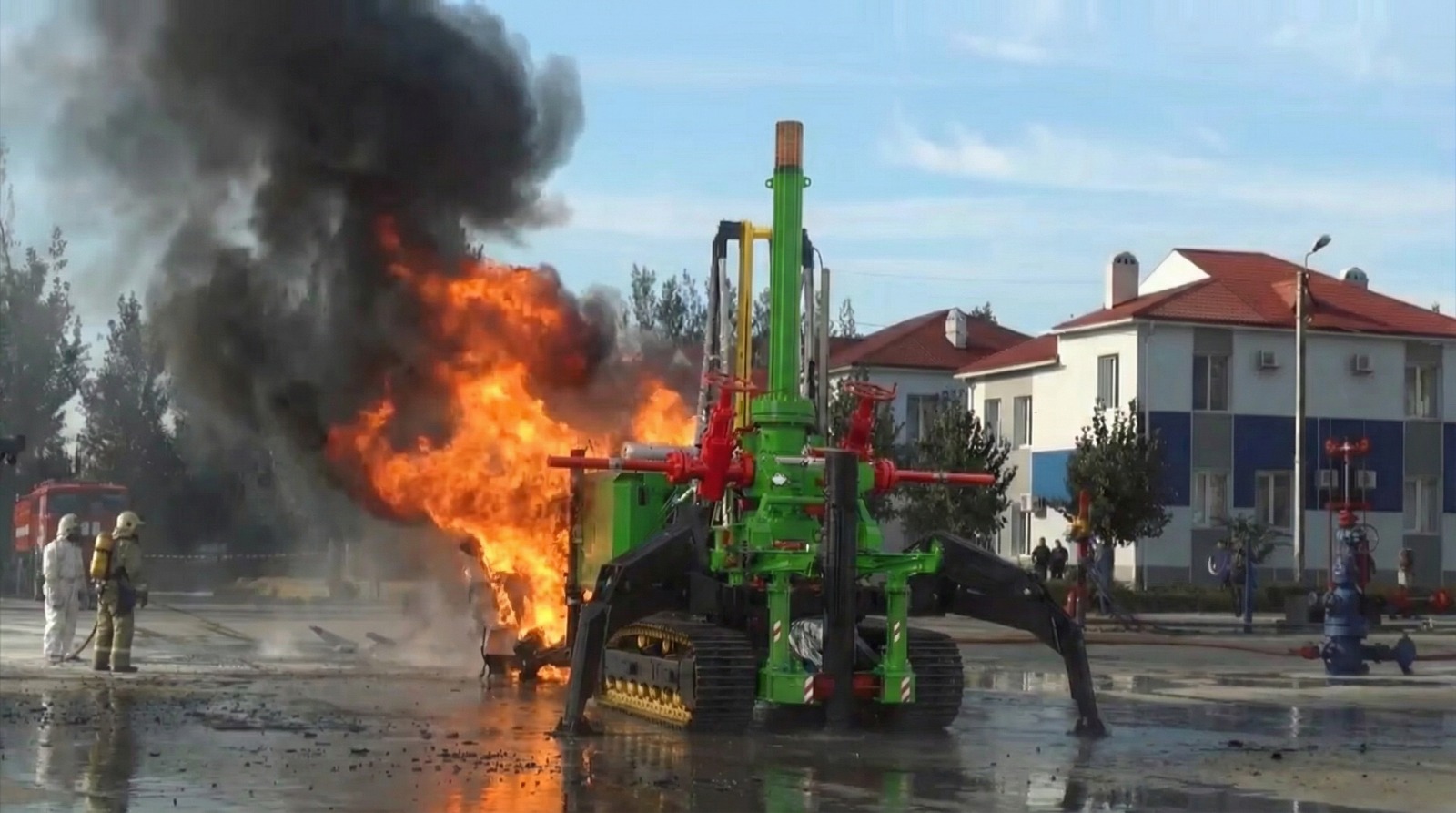
Tactics, machinery and remote control
A robot does not replace the emergency team. It brings their eyes and tools closer to the incident while people remain at a safer distance.
METHOD / 01
Tactics depend on flow rate, product composition, wellhead condition and available resources. This sequence illustrates a typical approach refined by the incident commander.
A compact platform approaches the facility and sends data to the operator.
A firefighting robot reduces heat exposure and opens a protected corridor.
After conditions stabilize, the team performs operations aimed at stopping product flow.
The robotic system remains on watch after open flames are eliminated.
Emergency well operations require an approved response plan and qualified leadership. This website presents a general concept and is not an operational procedure.
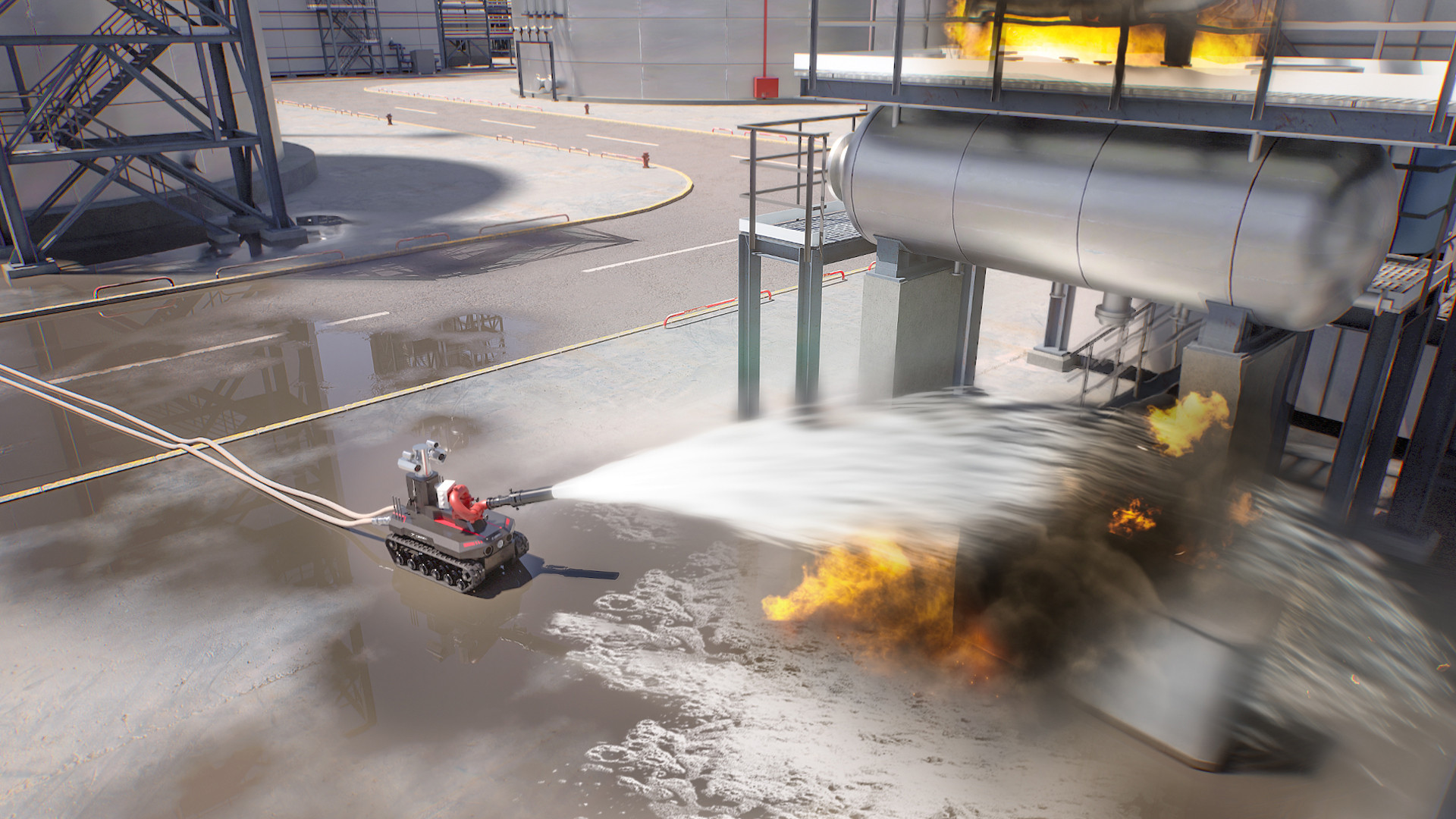
ARCHITECTURE / 02
The operator sees coordinated camera feeds, vehicle telemetry and tool status. Critical functions may retain cable or local backup modes.
Navigation, aiming and thermal imaging channels.
Temperature, pressure, actuator position, power and link status.
Controls, video display, event recording and diagnostics.
Radio with an optional cable channel for challenging environments.
Response plan integration